

This is Reno. September 1, 2026
By Kristen Hackbarth
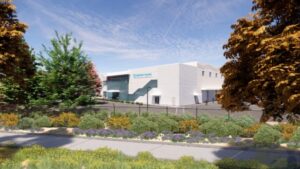
A rendering of the Advance Water Purification Facility in north Reno. Provided by TMWA
The city of Reno and Truckee Meadows Water Authority on Monday broke ground on the Advanced Purified Water Facility (APWF), a project that’s been in the works for several years and that officials said will be the first indirect potable reuse facility in Nevada.
The APWF, also called the American Flat project, is being built at a site on Lear Boulevard north of Reno. Once completed, the facility will be capable of producing up to 2 million gallons of purified water per day to replenish groundwater resources for future use. That amounts to half of the effluent released at the Reno-Stead Water Reclamation Facility.
Initially approved in 2022 by the city, costs were originally estimated at $118 million, but since then the cost to build the facility is more than $220 million, of which the city will pay $154 million. TMWA will cover 30% of the cost of the facility.
When first passed, Reno City Council members approved a $45 million sewer bond to help pay for the project. In 2024 they adjusted plans to increase the bond to $70 million. Another $84 million from the sewer fund will cover the city’s remaining share.
The AWPF is intended to provide another water source for the approximately 475,000 residents served by TMWA in Reno, Sparks and Washoe County and reduce the region’s reliance on the Truckee River.
The facility will use an ozone-biological activated carbon treatment process rather than reverse osmosis, resulting in potable water. Existing water treatment facilities in the area have a process that generates effluent water, which can be returned to the Truckee River or used for irrigation, but can’t be used for drinking or other household uses.
In the North Valleys, there are limited options to dispose of effluent from the Reno-Stead Water Reclamation Facility. Sierra Sage golf course purchases effluent to water its turf, and varying amounts go to North Valleys Regional Park and Sports Complex, Mayor’s Park, The Lakes Apartments and O’Brien Middle School. The rest is sent to Swan Lake.
The city, however, has been working on an alternative to sending more water into Swan Lake following flooding issues in the closed basin.
“Water is one of our community’s most important resources, and we have a responsibility to make sure we’re prepared for the future,” Reno Mayor Hillary Schieve said. “This facility provides us with a locally controlled, innovative water resource that will help strengthen our resilience during drought and support our community for generations to come.”
Project officials said the new treatment process has lower capital and operating costs and energy requirements and does not produce the brine concentrate associated with reverse osmosis systems.
The project follows more than 15 years of research, testing and planning, according to the city and TMWA. The Nevada Division of Environmental Protection (NDEP) designated the water produced by the facility as A+ Advanced Purified Water following a regulatory review.
TMWA General Manager John Zimmerman said the project resulted from cooperation between the utility and the city.
“By working together, TMWA and the city of Reno are creating a new water resource that will strengthen the reliability and resilience of our region’s water supply for decades to come,” Zimmerman said.
NDEP worked with the project team on the regulatory framework for the facility and provided about $128 million in State Revolving Fund financing, according to NDEP’s Jennifer Carr.
Construction is expected to continue through fall 2029. An education center is also planned at the site and is expected to open with the facility to provide information about advanced water purification.
Representatives from TMWA, the city of Reno and the project’s engineering and construction teams attended Monday’s groundbreaking ceremony.